
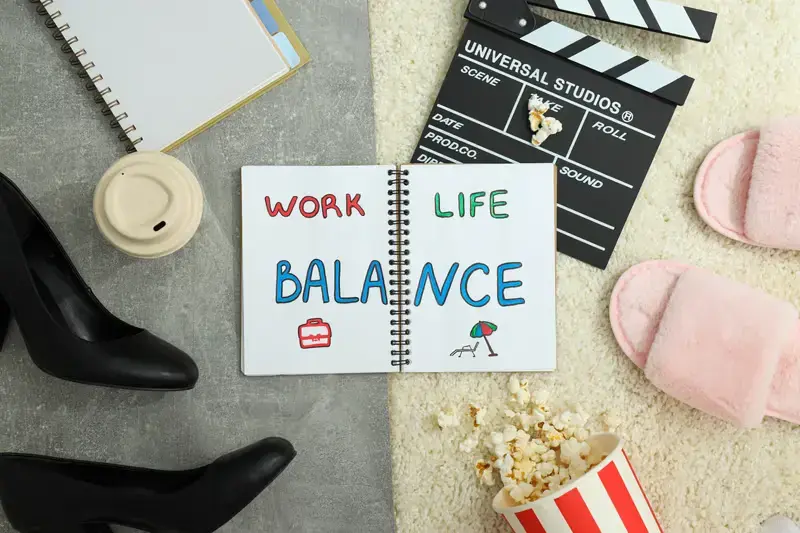
Work life balance is the ability to give your job the focus it deserves while still having enough time, energy, and attention for rest, relationships, health, and personal interests. It does not mean an equal split of hours. It means that neither side of your life consistently drains the other.
That definition matters because balance looks different for each person. A new parent, a night-shift nurse, a freelancer, and a manager at a start-up all need different rhythms. The goal is not perfection. It is sustainability, which means a way of working you can keep doing without burning out. When you reach it, you feel present at work, present at home, and more like yourself in both places.
Why It Matters More Than Ever
The data shows how important this issue has become. A January 2026 workforce survey found that 61 percent of workers say work-life balance plays a large role in how they feel about their jobs. Burnout is part of the picture too. DHR Global’s 2026 workforce report found that an overwhelming workload (48 percent), working too many hours (40 percent), and difficulty balancing work and personal life (37 percent) were the top three drivers of burnout. The same research reports that 83 percent of employees feel at least some degree of burnout.
These numbers are not just statistics. They describe tired people, strained families, and teams losing energy. Poor balance affects sleep, mood, relationships, and long-term health. The good news is that small changes in how you structure your day can change how you feel within weeks. Work life balance is not a bonus. It is a foundation for good work.
Boundaries: The Edges That Protect Your Day
Boundaries are the invisible lines that say, “This is work time, and this is mine.” Without them, work expands to fill every available hour. With them, you gain freedom.
Time Boundaries
Start by deciding your working hours and communicating them. This can be as simple as telling your team, “I’m online from nine to five, and I respond to non-urgent messages the next morning.” Put those hours in your calendar and email signature. Set a daily shutdown ritual, such as writing tomorrow’s top three tasks, closing your laptop, and taking a short walk. That small ritual tells your brain the workday is over.
Protect your breaks too. Schedule lunch away from your desk, and block time for focused work and personal commitments. If you work with people in other time zones, agree on overlapping hours instead of being available all day. Some countries, including France and Australia, have introduced forms of “right to disconnect” rules, which shows how seriously the issue is being taken. Whether or not your region has such laws, you can create your own version.
Space and Digital Boundaries
When your home is also your office, physical separation helps. A dedicated desk, even a corner, signals work mode. If space is tight, use a simple routine, such as putting your laptop in a bag at the end of the day. Keep work out of the bedroom whenever possible, since the brain links places with activities.
Digital boundaries matter just as much. Turn off work notifications after hours, remove email from your personal phone or mute it, and use separate profiles or browsers for work and personal life. Use “do not disturb” modes, and let urgent contacts reach you through a specific channel. Saying no is part of this skill. A polite sentence like “I can’t take that on this week, but I can look at it next Monday” protects your time without damaging relationships.
Wellness: The Fuel Behind Everything
You cannot sustain good work on an empty tank. Wellness habits are not extras. They are the base of productivity and joy.
Sleep comes first. Adults generally need at least seven hours a night, and chronic short sleep affects focus, mood, and immunity. Try to keep a regular schedule, dim lights in the evening, and keep your phone out of reach at night. Movement matters too. The World Health Organization recommends 150 to 300 minutes of moderate activity per week, and even short walks between meetings help clear the mind. A ten-minute stretch can reduce tension from long hours at a desk.
Food and hydration play a quiet but important role. Regular meals, plenty of water, and limiting late-day caffeine make energy steadier. Mental health deserves care as well. Practices such as journaling, mindfulness, time in nature, or talking to a friend reduce stress. If you notice persistent exhaustion, anxiety, or low mood, speak with a doctor or a mental health professional. Seeking help is a sign of strength, and many employers offer confidential support programs.
Do not forget joy. Hobbies, social time, and rest without guilt are not rewards you earn after finishing everything. They are part of the plan. People who protect time for what they love tend to return to work with more creativity and patience.
Remote Productivity: Working Smarter at Home
Remote and hybrid work have become standard for many people. Gallup’s May 2026 data shows that among remote-capable U.S. employees, 52 percent work hybrid, 26 percent work exclusively remote, and 22 percent work on-site. Gallup also reports that 76 percent of hybrid workers cite improved work-life balance.
But freedom has a catch. Research from Gallup suggests that fully remote workers can have high engagement yet struggle with balance. One summary notes that fully remote workers have the highest levels of engagement but are less likely to be achieving work-life balance. In other words, flexibility helps only when it is structured.
Build a Rhythm, Not Just a Schedule
Start your day with a simple routine, such as a walk, breakfast, and a quick review of priorities. Use your most energetic hours for deep work, the tasks that need focus, and keep meetings and email for lower-energy periods. Try time blocks of 60 to 90 minutes followed by short breaks. Some people like the Pomodoro method, which uses 25-minute focus sessions. Choose what fits your brain.
Limit multitasking. Switching between tasks drains attention and creates the feeling of being busy without finishing anything. Turn off unnecessary alerts, close extra tabs, and keep your phone away during deep work. Batch similar tasks, such as replying to messages twice a day instead of constantly. At the end of the day, review what you completed, not just what remains, so you finish with a sense of progress.
Communicate Clearly and Often
Remote work depends on clear expectations. Gallup found that employees who strongly agree that they know what is expected of them are 47 percent less likely to experience frequent burnout and 23 percent less likely to struggle with work-life balance a few times a week or more. That means clarity is a balance tool. Ask your manager about priorities, deadlines, and response times. Share your availability and your progress regularly. Use written updates so that your work is visible, because remote workers can feel overlooked. One 2026 study even described an “invisibility tax,” noting that remote and hybrid employees are 28 percent less likely than on-site workers to believe hard work leads to visible results.
Meetings deserve scrutiny. Ask whether each one needs to exist, whether it could be an email, and who truly must attend. Agendas and short durations keep them useful. Protect meeting-free blocks in your calendar.
What Employers and Managers Can Do
Balance is not only an individual task. Culture shapes it. Gallup has found that employees with fully self-determined hybrid schedules are 76 percent more likely to name burnout or fatigue as their greatest challenge and 57 percent more likely to cite reduced work-life balance compared with those whose schedules are set by the team. That suggests freedom needs shared norms. Another Gallup finding shows that teams with a formal hybrid collaboration plan are 66 percent more likely to be engaged and 29 percent less likely to be burned out.
Good managers model healthy behavior. They avoid sending late-night messages, respect time off, and recognize results instead of hours. They also check in on workloads, and they notice when someone seems overwhelmed. Companies can support balance with flexible hours, realistic deadlines, mental health resources, and training for managers. If you are a leader, ask your team what would help most, then act on it.
A Real-Life Example of Finding Balance
Here is a composite story based on common experiences. Priya, a marketing manager working remotely, felt exhausted despite not doing anything dramatic. She tracked her day for a week and discovered that she checked email at 6 am, ate lunch at her desk, and answered messages until 10 pm.
She made four changes. She set work hours from nine to five-thirty, turned off notifications after that, took a real lunch walk, and blocked two focus periods each morning. She also told her team what she was doing and why. Within a month, she slept better, felt calmer, and finished more important tasks. Her manager noticed better quality work, not less. Priya did not work fewer hours by magic. She worked with clearer edges, and that changed everything.
Expert Insights Worth Remembering
Psychologists and workplace researchers tend to agree on a few ideas. First, recovery is a part of performance. Rest is not the opposite of productivity, it is what makes productivity possible. Second, small habits beat grand resolutions. A shutdown ritual, a daily walk, and a clear start time will change your life more than a dramatic overhaul that fades in two weeks.
Third, balance changes with seasons of life. A new baby, a big project, or a family illness can tilt things for a while. The aim is to notice and rebalance, not to judge yourself. Fourth, be honest about values. Ask yourself what matters most and whether your calendar reflects that. If your week has no space for the people you love, the schedule is telling you something. If you feel chronically overwhelmed, consider speaking with a trusted mentor, coach, or mental health professional, since individual circumstances vary.
Mistakes That Quietly Break Balance
The most common mistake is being always available. It feels responsible, but it trains others to expect instant replies and leaves you no time to recover. Another mistake is treating balance as a reward for finishing everything, because the list never ends. Many people also work through illness, skip breaks, and say yes to every request.
Remote workers often make a different mistake, which is overworking to prove they are productive. This leads to long hours and exhaustion. Others ignore social connection, which creates loneliness. Comparing yourself to colleagues or social media is another trap, since you only see their highlights. Finally, some people wait for the perfect plan. Start small. Pick one boundary, one wellness habit, and one productivity routine, and adjust as you learn.
Final Thoughts
Work life balance is not a finish line. It is a daily practice of choosing where your attention goes. Some days you will lean toward work, and others toward family or rest, and that is fine as long as the overall pattern keeps you healthy and connected. Sam, the man from our opening story, now closes his laptop at six, walks around the block, and eats dinner without a screen. His work did not suffer. His life got bigger. Begin with one small boundary tonight, such as turning off notifications after dinner. Let it settle, then add another. Over time, you will build a rhythm that supports your career and, more importantly, the life you are working for.