
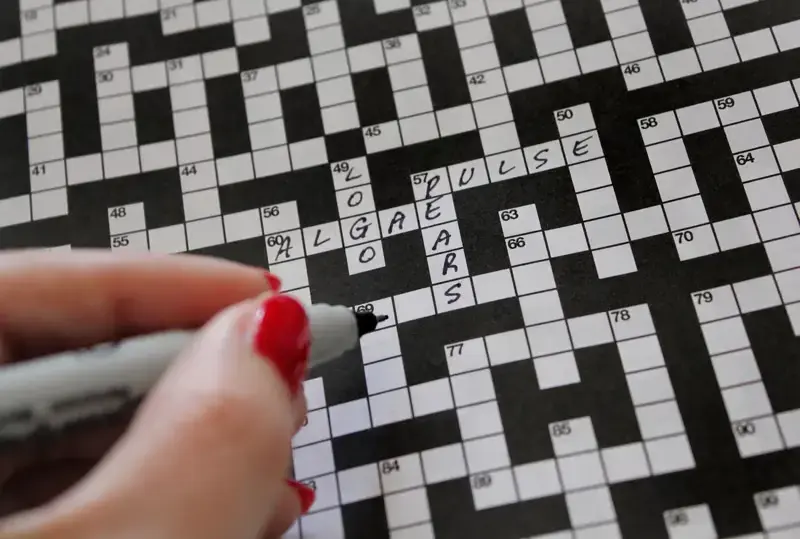
Every morning, Ruth sits at the same kitchen table with a cup of tea and a folded newspaper. She does not read the headlines first. She goes straight to the crossword. Her late husband used to do it with her, trading answers across the table, and arguing happily over whether “ENTRÉE” or “ENTREE” fit the squares. These days she solves alone, but the ritual hasn’t changed. Ten minutes in, a clue clicks, a word fills in, and she smiles. It is a tiny victory, and it sets the tone for her day.
Ruth’s story is familiar to millions of people around the world. Crossword puzzles are more than a pastime. They are a daily conversation between you and a stranger who loves language as much as you do. They stretch vocabulary, flex memory, and give the mind a small, satisfying workout. This guide explores their history, the art of clue writing, what science says about brain health, and practical strategies for solving. Read on, and you may find yourself reaching for a pencil.
A Short History of the Crossword
Crossword puzzles feel timeless, but they are younger than many people think. Their story is a mix of newspapers, ingenuity, and a little accident, and understanding it helps you appreciate why the format has lasted.
From Word-Cross to Daily Ritual
The first modern crossword appeared on December 21, 1913, in the New York World newspaper. It was created by Arthur Wynne, a journalist from Liverpool, who called it a “word-cross.” It had a diamond shape and no black squares, but the basic idea was there: clues across and down, with words crossing at shared letters. Readers loved it, and other newspapers soon copied the format.
By the 1920s, crossword puzzles had become a craze. Publishers released puzzle books, and the habit crossed the Atlantic to Britain. The New York Times resisted at first, but it introduced its own crossword in 1942, and it eventually became one of the most famous puzzles in the world. Editors such as Margaret Farrar shaped the standards, and Will Shortz, who has edited the puzzle since 1993, helped bring it into a new age of wordplay and cultural references. Today, crosswords appear in newspapers, apps, and websites, and a large community of solvers share times, tips, and friendly rivalry.
How Modern Puzzles Are Built
A good puzzle is a careful balance of art and engineering. Constructors begin with a theme, a set of long answers linked by a clever idea, such as puns, hidden words, or a changed letter. They then build a symmetrical grid, fill in the shorter words, and write clues. The process may take hours or days, and editors often rewrite clues to improve fairness, freshness, and difficulty.
Difficulty usually follows a pattern. In many American newspapers, puzzles get harder as the week goes on. Monday is the easiest, Saturday is the toughest, and Sunday is large but similar in difficulty to Wednesday. Knowing this helps beginners choose the right level and builds confidence, since a Monday puzzle is a friendly way to learn the language of clues.
Anatomy of a Clue: The Wordplay Behind the Squares
Clues are the heart of the craft. They are small puzzles in themselves, and learning to read them is the biggest step toward becoming a confident solver. Once you recognize their patterns, grids that once felt impossible start to open up.
Straight Definitions and Clever Misdirection
The simplest clue is a direct definition. A clue like “Feline pet” leads to CAT. Many early-week clues work this way, giving you a gentle path into the grid. Slightly harder clues use synonyms, so “Large body of water” could be OCEAN, SEA, or LAKE, depending on the number of squares and crossing letters.
Then come the clues that play tricks. Constructors love misdirection, using words with several meanings to lead you down the wrong path. A clue such as “Flower” might not refer to a rose at all. It could mean a river, since a river “flows,” and the answer might be NILE or RHINE. This is part of the pleasure. When you realize you were looking at the wrong meaning, the answer feels like a small revelation.
Question Marks, Abbreviations, and Cryptic Cousins
Certain signals in clues act like road signs. A question mark at the end usually warns you that the clue involves wordplay or a pun. For example, “Bar bill?” could be an answer like TAB, but “Where to find a good time?” with a question mark might be CLOCK. An abbreviation in the clue often means an abbreviation in the answer, so “Dr.’s org.” may lead to AMA. Words like “briefly,” “for short,” or “informally” signal shortened forms. A foreign word in the clue usually asks for an answer in that language, so “Sea, in Paris” points to MER.
Cryptic crosswords, popular in the United Kingdom and many other countries, use a different style. Each clue has two parts, a definition and a piece of wordplay such as an anagram, a hidden word, or a homophone. They look intimidating, but they reward patient solvers with a deeper sense of mastery. If you enjoy standard crossword puzzles, trying a beginner cryptic is a wonderful next step, and many websites offer clear tutorials.
What Crossword Puzzles Do for Your Brain
People often say that crossword puzzles keep the mind sharp. It is a lovely idea, and there are some encouraging findings. But it is important to separate what we know from what we hope, since brain health is a serious topic.
What the Research Really Shows
Solving a crossword exercises several mental skills at once. You retrieve words from memory, shift between meanings, hold partial answers in working memory, and use logic to test possibilities. This kind of cognitive engagement is part of what researchers call a cognitively stimulating lifestyle, which is associated in many studies with better brain health as we age.
One of the most notable studies on crosswords specifically was a randomized trial from Columbia University and Duke University, published in NEJM Evidence. Researchers assigned 107 participants with mild cognitive impairment to either crossword puzzle training or cognitive game training, with intensive training for 12 weeks followed by booster sessions for up to a year and a half. The findings were intriguing. Crossword puzzles were superior on the main cognitive measure, ADAS-Cog, at both 12 weeks and 78 weeks, and superior on a measure of daily functioning at 78 weeks. MRI scans also showed less brain shrinkage in the crossword group at 78 weeks.
Earlier observational research has also hinted at a link between regular puzzle activity and healthier cognitive aging. For example, a well-known study from the Bronx Aging Study, published in 2003, found that older adults who regularly did mentally stimulating leisure activities, including crossword puzzles, had a lower risk of developing dementia. However, observational studies cannot prove cause and effect, because people who already have healthy brains may be more likely to enjoy puzzles.
What the Research Cannot Promise
Honesty matters here. The Columbia and Duke researchers themselves were careful. The lead author said the results were not definitive, and that larger studies with a control group are still needed. A limitation noted in coverage was the absence of a control group that did not receive cognitive training, which means we cannot say whether crosswords are better than simply doing nothing. The participants also had mild cognitive impairment, so the results may not apply to everyone.
In plain words, crossword puzzles are a promising, enjoyable way to keep your mind active, but they are not a proven shield against Alzheimer’s disease or dementia. Major health organizations point instead to a broader picture of brain health, which includes physical exercise, good sleep, a balanced diet, social connection, blood pressure control, and avoiding smoking and excess alcohol. Think of crosswords as one good habit in a bigger toolbox. If you are worried about memory changes, speak with a doctor rather than relying on puzzles alone.
There is another benefit that research cannot easily measure. Many solvers say that puzzles bring calm, focus, and a sense of achievement. For people who live alone, a daily puzzle can create routine and connection, especially when shared with friends or family. Those emotional rewards matter for well-being, and they may be worth the effort even before the science is settled.
How to Solve Your First Grid Without Giving Up
Starting is the hardest part. The grid looks like a wall of white squares, and the clues seem to speak a secret language. Begin with an easy puzzle, such as a Monday-level grid or a daily mini. Easier puzzles use more direct clues and give you quick confidence.
Read the clues until you find one you know for sure. Fill in short answers first, because they are often easier. Look for fill-in-the-blank clues, like “___ and cheese,” since they tend to be simple. Once you have a few letters, the crossing words become easier. Work back and forth between across and down clues, and let each answer help the next. If you get stuck, move to a different corner. Often, a fresh area unlocks the part that stumped you.
Use a pencil if you are on paper, or the check feature on an app while learning. There is no shame in looking up an answer. Many beginners learn faster by checking a tough clue and understanding why it works. The goal is to build your vocabulary of patterns, not to prove purity. Over time, you will rely on hints less, and your speed will grow.
Strategies for Faster, Smarter Solving
Experienced solvers share a few habits. First, pay attention to the length and the tense of clues. If the clue is in the past tense, the answer usually is too. If the clue is plural, so is the answer. Second, look for common patterns in word endings, such as -ED, -ING, -ER, and -S. Filling in these small pieces can create a framework for longer answers.
Third, think about the theme. Many themed puzzles reveal their idea through the longest answers, and once you see the trick, other theme answers fall into place. Look at the title, since it often hints at the theme. Fourth, be flexible about meaning. If an answer does not fit, ask whether the clue could be using a different sense of a word, a pun, or a slang term.
Finally, keep a calm mind. Frustration clouds thinking. If you feel stuck, take a break, drink some water, or come back later. Many solvers report that the answer appears when they stop forcing it, which is a familiar experience of insight. Speed matters little. Enjoyment matters most.
Crosswordese and Your Personal Word Bank
Regular solvers soon meet crosswordese, a group of words that appear often because they have friendly letter combinations. Words like OREO, ERA, ALOE, ARIA, ERIE, and ETUI show up again and again. Once you learn them, they become old friends that unlock tricky corners. Constructors have worked to reduce overused fill in recent years, and modern puzzles often include newer words, brand names, and pop culture, but crosswordese remains a handy skill.
Build your own word bank. Keep a small notebook or a notes app where you record new words, tricky clues, and answers that surprised you. Review them occasionally. You will notice that the same ideas recur, such as rivers, opera terms, Greek letters, and famous authors. As your bank grows, you will recognize patterns faster, and your vocabulary will broaden in the best way. This is one of the quiet joys of the habit. You learn without trying, and the learning sticks because it is tied to a satisfying moment of solving.
Building a Daily Puzzle Habit That Lasts
A habit sticks when it is small, enjoyable, and attached to an existing routine. Pair your puzzle with a regular moment, such as morning coffee, a commute, or an evening wind-down. Start with ten or fifteen minutes. Choose a level that feels challenging but not discouraging, and increase difficulty gradually.
Mix formats to keep things fresh. Try a themed puzzle one day, a mini the next, and a cryptic on weekends. Share the experience with others, whether by solving with a partner, joining a class, or comparing answers with friends. Social puzzling adds laughter and gentle accountability. Avoid turning it into a chore, and give yourself permission to skip a day.
Remember to balance puzzles with other healthy activities. Take breaks to stretch your eyes and body if you solve for a long time. If you use a tablet or phone, keep the screen away from bedtime, since bright light can disrupt sleep. A puzzle is a pleasant companion to a healthy lifestyle, not a replacement for exercise, sleep, or social life.
Beyond the Newspaper: Apps, Books, and Puzzle Communities
Today, crossword puzzles exist in many forms. Major newspapers offer apps with archives, streaks, and stats, while independent constructors publish creative puzzles through newsletters and websites. Many libraries offer free access to digital puzzle collections, and some community centers host puzzle groups. Puzzle books remain popular, and they make lovely gifts.
Online communities add another layer. Forums and blogs discuss daily puzzles, explain clues, and celebrate clever constructions. They are a great way to learn from others, particularly when you are stuck. Some people join friendly competitions, such as national crossword tournaments, though casual solving is just as rewarding. If you are curious about creating puzzles, free construction tools are available, and many solvers enjoy making a small grid for a friend’s birthday. Creating a puzzle is a delightful way to see the craft from the other side.
A Real-Life Example of a Puzzle Habit
Here is a composite story based on common experiences. Daniel, a retired teacher in his seventies, noticed that he sometimes struggled to recall names. Rather than worry in silence, he spoke with his doctor, who checked his health and reassured him that mild forgetfulness is common but worth monitoring. His doctor encouraged regular exercise, a balanced diet, and mentally engaging hobbies.
Daniel had never done crosswords, so he began with a daily mini. Within weeks, he moved to Monday and Tuesday puzzles, and after a few months he joined a small weekly puzzle club at his local library. He still walked every morning and kept his medical checkups. Nothing about his routine was extreme, yet he felt more engaged, more social, and more confident. His story shows how crossword puzzles can be a pleasant part of a bigger plan for healthy aging, not a magic fix.
Expert Advice From Constructors and Neurologists
Puzzle constructors often tell beginners to read widely. The more you know about books, music, science, and everyday language, the more clues will make sense. They also encourage solvers to embrace mistakes. A wrong answer teaches you how a particular clue style works, and that knowledge pays off later. Editors say that fresh, fair clues are the heart of a great puzzle, and fairness means that the answer feels inevitable once you see it.
Neurologists and geriatric specialists give a complementary message. They emphasize that no single activity guarantees brain health, but staying mentally active, physically active, and socially connected is a sound strategy. They suggest choosing activities you genuinely enjoy, since you are more likely to keep doing them. They also recommend regular checkups, managing blood pressure, getting good sleep, and talking to a clinician about any noticeable changes in memory. If you or someone you love shows signs of significant cognitive decline, seek professional evaluation promptly, because early assessment matters.
Mistakes That Steal the Fun
The most common mistake is starting with a puzzle that is too hard and quitting in frustration. Begin gently, and let confidence grow. Another mistake is treating the puzzle as a test of intelligence. It is not. It is a conversation with a creative mind, and the goal is delight. Some solvers rush and fill in answers without checking crossings, which leads to errors that ripple across the grid. Slow down, and confirm answers with crossing letters.
Others refuse to look anything up, then abandon puzzles when they hit unfamiliar territory. Looking up a tricky clue is a normal part of learning. A further mistake is solving only one type of puzzle, which can limit growth. Try variety. Finally, do not rely on puzzles alone for brain health. They are one enjoyable piece of a healthy life, and they work best alongside movement, sleep, nutrition, and friendship.
Final Thoughts
There is something quietly beautiful about a crossword. It starts as a blank grid and ends as a small, complete world of words. Along the way, it asks you to be curious, patient, and a little playful. Whether you solve with a pen on a Sunday morning, tap through a mini on your phone, or swap clues with a friend across the table, you are doing something that humans have loved for over a century. The research on brain health is still growing, and honesty means admitting what we do not yet know. But the joy of that small click, when a clue gives way and the answer slips into place, needs no study to prove it. Pick up a pencil, start with an easy grid, and let the words welcome you.