
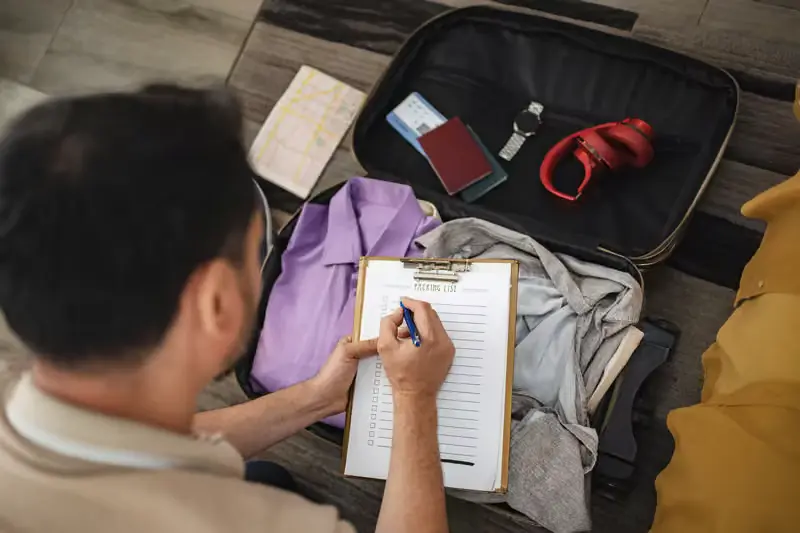
Packing from memory feels fast, but it is risky. Your brain is busy with work, boarding times, and a dozen small worries, so it forgets the dull items first. Chargers, adapters, medication, and spare underwear are the things people forget most often, and they are exactly the things you cannot easily replace in an airport at midnight.
A travel packing list does three useful jobs. It makes sure you bring what you need, which protects your comfort and safety. It stops you from bringing what you do not need, which saves weight and baggage fees. And it clears mental space, because once the list is written, you no longer have to remember anything. Many travelers keep a master list in a notes app and adjust it for each trip. Over time, the list becomes a personal system, and packing a bag takes minutes instead of hours.
Know the Rules Before You Pack
Rules change, and airlines enforce them differently, so the best time to learn them is before the suitcase is full. A few minutes of checking can save a confiscated bottle, a surprise fee, or a missed flight.
Liquids, Batteries, and ID in 2026
The famous liquids rule is still alive. As one 2026 airport guide states, the 3-1-1 rule has not changed in 2026, meaning containers of 3.4 ounces or 100 milliliters or less, all inside one quart-size bag, one bag per passenger. Remember that officers look at the labeled size of the container, so a large bottle that is only partly full can still be rejected. Many travelers now choose solid alternatives, such as shampoo bars and toothpaste tablets, to avoid the problem entirely. Medicines are treated differently, and liquid medications are exempt from the 3-1-1 rule, though you should declare them at the checkpoint.
The bigger change in 2026 involves lithium batteries. Federal guidance is clear that spare lithium-ion batteries, including power banks and phone charging cases, must be carried in carry-on baggage only. Airlines have also tightened their own policies. According to one 2026 travel guide, American and Delta allow two power banks per passenger as of May 1, 2026, Southwest allows one, and none of them let you charge a power bank in flight. Most consumer power banks under 100 watt-hours are allowed, while larger units may require airline approval and some airlines prohibit them entirely. Check your airline’s current battery policy before you fly, and keep the device where you can reach it.
Identification matters too. The REAL ID requirement took effect on May 7, 2025, so domestic fliers need a compliant license, a passport, or another approved ID. Travelers without acceptable ID may face a fee. One packing guide notes that since February 1, 2026, travelers who cannot produce acceptable ID can pay a $45 fee to use TSA ConfirmID. Avoid the stress by checking your ID well before the trip, and bring your passport for any international journey.
Bag Size and Weight Limits
Airport security checks what is inside your bag, but the airline decides how big the bag can be. As one guide puts it, TSA does not regulate carry-on bag size, the airlines do. Typical limits for a full-size carry-on in the United States are about 22 by 14 by 9 inches, and many European airlines use around 55 by 40 by 20 centimeters, often with a weight limit between seven and ten kilograms. Budget airlines are stricter, and some charge for anything beyond a small personal item, commonly in the range of about 17 by 10 by 9 inches. International carriers may focus on weight more than size.
Always check the exact numbers for your airline and fare type, because Basic Economy tickets sometimes restrict overhead bin access. Pack a luggage scale in your bag, or weigh yourself with and without the suitcase at home. If your bag is close to the limit, wear the heaviest shoes and jacket on the plane. This old trick still works.
Choosing the Right Bag and Packing Tools
Your bag shapes your trip more than most people realize. A bag that is too big tempts you to overpack. A bag that is too small forces stressful choices. For most trips of up to a week, a carry-on-size suitcase or a travel backpack is enough, and it frees you from baggage claim lines and lost luggage.
Hard-shell suitcases protect fragile items and resist rain, while soft-sided bags squeeze into tight overhead spaces and often have handy outer pockets. Backpacks suit cobblestone streets, trains, and adventurous routes, but they can be harder on the shoulders. Choose smooth wheels, a sturdy handle, and zippers that feel strong. A second small bag, such as a slim backpack or tote, becomes your personal item under the seat.
A few small tools make a big difference. Packing cubes keep clothes organized and compress bulk. A clear zip-top toiletry bag speeds up security. A lightweight laundry bag separates dirty clothes. A small luggage tag with your contact details, plus a hidden card inside, can help if the bag is lost. A portable luggage scale prevents surprise fees. If you travel often, a tracker tag placed inside your bag gives you peace of mind and helps airlines locate it quickly.
Building a Capsule Wardrobe That Works
The secret of light packing is a capsule wardrobe, a small collection of clothes that mix and match. Choose a simple color palette, such as neutrals with one or two accent colors, so everything goes with everything. Aim for pieces that layer well, dry quickly, and resist wrinkles. Fabrics like merino wool, technical blends, and lightweight cotton are popular because they breathe and travel well.
Clothes Matched to Climate
Start with the weather. Check the forecast for your destination a few days before you leave, and look at the typical temperature range for that season. For warm destinations, pack breathable tops, light trousers or skirts, shorts, a swimsuit, a hat, and sunglasses, plus one slightly warmer layer for cool evenings and air-conditioned rooms. For cold destinations, think layers: a thermal base layer, a warm mid layer such as fleece or wool, and a windproof or waterproof outer shell. Gloves, a hat, and a scarf take little space and make a big difference.
For mixed or unpredictable climates, bring versatile items such as a light rain jacket, a packable sweater, and quick-dry pants. Count your outfits by activities and days, not by fantasies. A common rule is to pack for about a week, then plan to wash or re-wear items. A typical week might include five tops, three bottoms, one dressy outfit, a light jacket, sleepwear, and enough underwear and socks for about seven days, though you can reduce that if laundry is available.
Shoes, Layers, and a Laundry Plan
Shoes are the heaviest and bulkiest part of any bag, so be strict. Most trips need no more than three pairs. Wear the bulkiest pair on the plane, bring one comfortable walking pair that suits your destination, and add one lighter option, such as sandals or dressy flats, if needed. Stuff small items such as socks inside shoes to save space, and place shoes in a bag or shower cap to protect clothes.
A laundry plan can cut your luggage in half. Pack a small packet of travel detergent or laundry sheets, and wash a few items in the sink in the evening. Quick-dry fabrics are usually ready by morning. Look for hotels with laundry services, or local laundromats if you are staying longer. For trips beyond ten days, plan to do laundry rather than packing for the entire period.
Carry-On Gear You Should Never Check
Some items belong in the cabin, no matter what. The golden rule is simple. If losing it would ruin your trip, keep it with you. Mara learned this in Lisbon, and you can learn it more cheaply.
Documents come first. Passport, ID, boarding passes, visas, insurance details, hotel confirmations, and any entry forms should live in your personal item, preferably in a slim travel wallet or document pouch. Store digital copies in a secure cloud folder or send them to yourself by email in case you lose the originals.
Medication is next. Keep all prescriptions in their original containers in your carry-on, with a printed list of medications and a doctor’s note if needed. Bring enough for the trip plus a few extra days in case of delays. Add essentials such as pain relievers, allergy medicine, and any items you cannot easily buy abroad.
Electronics and valuables also stay with you. Phones, laptops, cameras, headphones, power banks, and chargers go in the cabin, and the battery rule makes this mandatory for spare lithium batteries. Add cash, credit cards, and jewelry. Finally, pack one change of clothes, basic toiletries, and a comfortable layer in your carry-on. If your checked bag is delayed, you will still have what you need for a day or two.
For comfort on the flight, include a refillable water bottle, which you can fill after security, a neck pillow or eye mask, earplugs or noise-canceling headphones, lip balm, hand cream, a toothbrush, and a few snacks. Long flights dry the air and the skin, and small comforts feel enormous at thirty thousand feet.
Toiletries, Medicines, and First-Aid Basics
Toiletries add weight quickly, so shrink them. Decant products into small, leakproof bottles, or buy travel sizes. Choose multi-use items such as a moisturizer with sunscreen, or a bar of soap that works for face and body. Pack only what you will use, and remember that many hotels provide shampoo, soap, and a hair dryer. Check ahead.
A small first-aid kit is worth its space. Include adhesive bandages, blister plasters, antiseptic wipes, pain relief, anti-diarrhea tablets, oral rehydration salts, antihistamines, insect repellent, and sunscreen, adjusting for your destination. If you wear glasses or contacts, bring a spare pair and solution. If you have medical conditions, carry a card with details in English and the local language when possible. For international trips, ask a travel health clinic about vaccinations and local health advice well in advance, because some require weeks to take effect.
Remember to separate liquids that count under the 3-1-1 rule. One packing guide recommends placing the clear bag in the front pocket so it is easy to reach at security. Anything bigger than 100 milliliters belongs in your checked bag, or should be left at home.
Tech, Chargers, and Documents
Modern travel depends on small electronics, and forgetting a cable can be surprisingly stressful. Make a short tech list: phone, charger, universal adapter, power bank, headphones, and any device-specific cables. A single multi-port USB charger can replace several plugs. Check the plug types and voltage of your destination, since adapters do not change voltage. Most modern phone and laptop chargers handle multiple voltages, but hair dryers and shavers may not.
Bring a small pouch or cable organizer to prevent tangles. Download maps, boarding passes, hotel details, translation apps, and entertainment before you leave, so you are not dependent on airport Wi-Fi. Consider a local eSIM or an international data plan for connectivity. Back up your photos regularly, and consider enabling tracking features on your phone and laptop.
For documents, make a travel folder with printed and digital copies of passports, tickets, insurance, itineraries, and emergency contacts. Share your itinerary with someone you trust. If you need a visa or entry authorization, apply early and double-check the passport validity rules, because many countries require at least six months of validity beyond your travel dates.
How to Pack: Rolling, Cubes, and Weight Balance
Once your items are chosen, packing technique decides how much fits. Rolling clothes saves space and reduces wrinkles in many fabrics, while folding works well for structured items like shirts and jackets. Packing cubes compress and separate clothes by type, making it easy to find what you need without unpacking everything. Some travelers use one cube per category, others one cube per day or outfit.
Place heavy items, such as shoes and toiletries, near the wheels and spine of the suitcase so the bag stays stable. Put delicate items in the center, wrapped in soft clothes. Use every empty space, such as the inside of shoes, with socks, chargers, or small accessories. Keep a few flat items, like a light scarf or tote, on top for easy access. Leave a little room for souvenirs, or pack a foldable bag for the return trip.
Think about access during travel. Place documents, a charger, medication, headphones, and snacks in your personal item, where you can reach them without opening the main bag. Keep your jacket accessible, since airplane cabins and airports can be chilly. Before closing the bag, do a final check by running through your list, and weigh the suitcase if you are near the limit. Take a photo of your packed bag, which can help if it is lost, because you can show exactly what is inside.
Checklists for Different Trip Types
A single master list is a great starting point, but each trip type needs small adjustments. Here are examples in short, flowing form, so you can adapt them to your own list.
The Weekend City Break
For two to three days, bring a small carry-on or backpack. Pack two or three tops, one or two bottoms, one dressy outfit, comfortable walking shoes, sleepwear, underwear and socks, a light jacket, toiletries in travel sizes, a charger, a power bank within airline rules, an umbrella or light rain jacket, and your documents. A day bag or foldable tote is useful for sightseeing. Skip extra shoes and heavy items, and plan to wash anything you need.
Beach, Mountain, and Business Trips
For a beach trip, pack swimwear, a cover-up, sunscreen, a wide-brim hat, sunglasses, lightweight clothes, sandals, a reusable water bottle, and a quick-dry towel. For mountain or hiking trips, think layers, moisture-wicking base layers, a waterproof jacket, sturdy broken-in shoes, hiking socks, a headlamp, a first-aid kit, and a refillable water system. Check local weather and trail conditions carefully, because mountain weather changes fast.
For business trips, bring wrinkle-resistant clothes, two or three versatile outfits in coordinating colors, one pair of dress shoes, a travel steamer or wrinkle spray, a slim laptop bag, chargers, business cards, and printed copies of key documents. Keep work essentials in your personal item, in case your suitcase is delayed. A small garment bag or packing folder helps keep suits and shirts neat.
A Real-Life Example of Packing Light and Smart
Here is a composite story based on common traveler experiences. Daniel was planning a ten-day trip across Italy by train. His old habit was to bring a large checked suitcase filled with outfits for every possible situation. This time, he created a travel packing list a week before departure and wrote down his planned activities.
He chose a carry-on backpack and a small day bag, picked five tops and two pairs of trousers in neutral colors, a light jacket, and two pairs of shoes. He packed cubes for clothes, a small laundry kit, and a power bank that met airline rules. On the train platform, he lifted his bag easily, hopped on, and never waited at a baggage carousel. He did laundry twice in a sink, and he returned home with space for gifts. His biggest comment was simple. He had not missed a single thing he left behind.
Expert Advice From Frequent Flyers
People who fly often share a few consistent habits. First, they pack a few days early and lay everything out on the bed. Seeing the pile makes it easier to remove extras. Second, they keep a ready-to-go toiletry kit and a travel charger kit, so packing becomes assembly instead of search. Third, they dress in layers and wear their bulkiest items on the plane.
Fourth, they follow the one-more-day rule. If you are unsure whether you need an item, ask whether you would buy it at your destination if forgotten. If the answer is yes, leave it at home. Fifth, they check airline rules the day before travel, since policies on batteries, bag sizes, and fees change. Finally, they keep important items on their person during travel, and they never check anything they cannot afford to lose.
Experts also recommend travel insurance for longer or more expensive trips, since it can cover lost baggage, medical emergencies, and delays. For health-related questions, such as vaccinations or medication, consult a doctor or travel clinic. For special items like sports equipment, musical instruments, or medical devices, contact the airline in advance to confirm the rules.
Mistakes That Make Bags Heavy and Trips Stressful
The most common mistake is overpacking, driven by the fear of the unknown. Most people wear the same few favorite outfits repeatedly, and extra clothes just add weight. Another mistake is packing for the weather you hope for instead of the weather you will get, so check forecasts and bring a light rain layer.
Many travelers also forget about airline rules until they reach the airport. Oversized liquids, extra power banks, or a bag a few centimeters too big can mean fees, delays, or confiscation. Others place valuables, medication, or chargers in checked bags and regret it when the bag is delayed. New shoes that have not been broken in can ruin a trip, as can too many “just in case” items. Skipping a final check of documents is another classic error. Finally, packing every inch of the suitcase leaves no room for souvenirs and makes the return trip a struggle. Aim for a bag that closes easily and feels manageable when you carry it up a flight of stairs.
Final Thoughts
A good travel packing list is not about owning the perfect gear. It is about giving yourself freedom. When your bag is light, organized, and ready, you move through airports with calm, you say yes to spontaneous detours, and you arrive at your destination as yourself, not as a person in a panic. Mara, the traveler from our opening story, now keeps a list on her phone and a ready-to-go kit by the door. Her medication, her charger, and a spare shirt always ride in her carry-on, and she smiles at the carousel no matter what rolls past. Start your own list tonight, test it on your next trip, and refine it each time. The best bag is the one that lets you forget it is there.